
Natural Sorting Materials Kit | 12-Piece Eco-Friendly Loose Parts Sensory STEM & Early Math Set


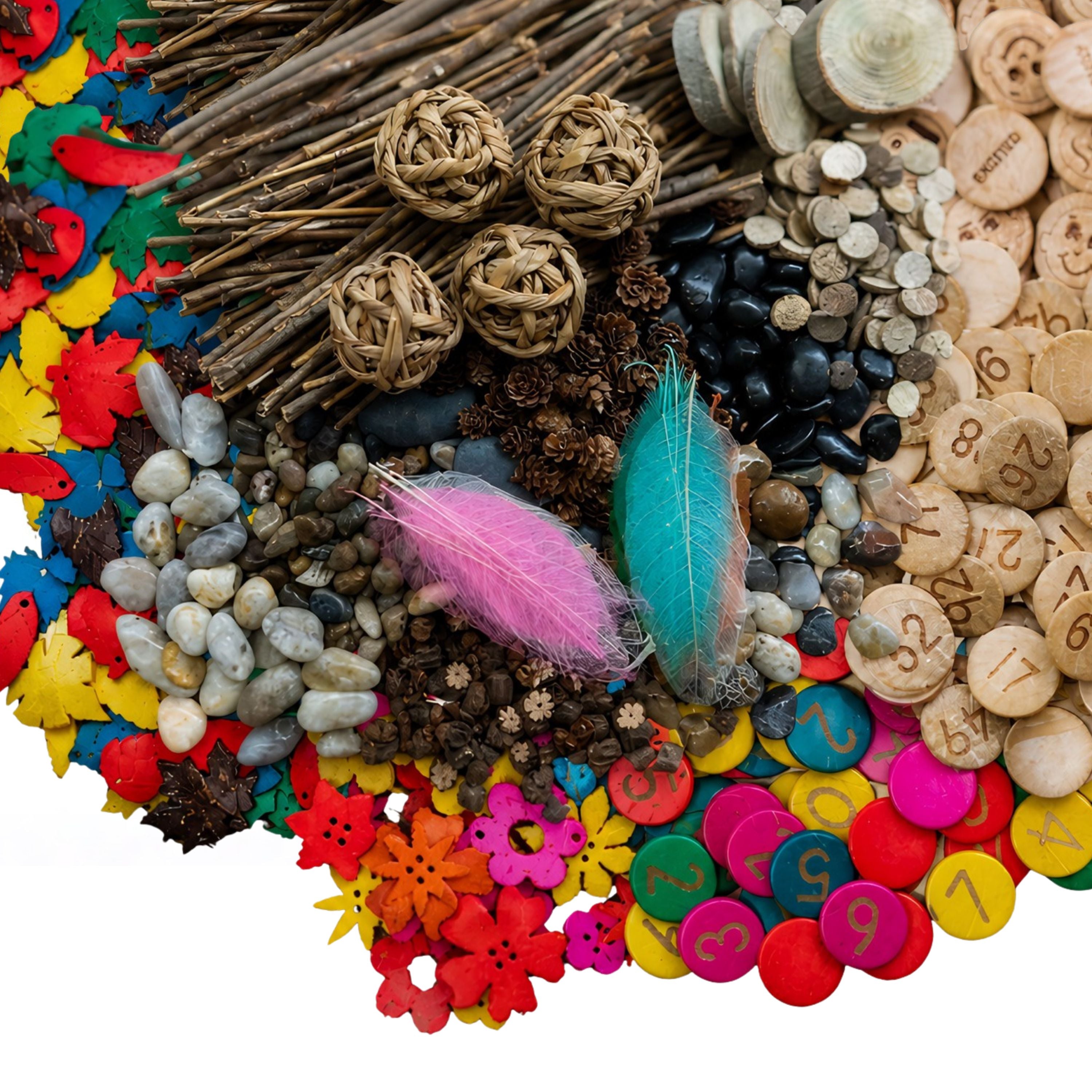
Bring nature, early math, sensory exploration, and STEM discovery together with the Natural Sorting Materials Kit, a versatile collection of 12 types of natural loose parts designed for preschool children ages 3 years and up. Featuring skeleton leaves, rattan, bamboo, stones, pine cones, wood, and coconut shell pieces, this open-ended learning set encourages children to sort, count, classify, compare, create patterns, investigate textures, and explore the natural world through hands-on activities.
Ideal for preschool classrooms, math centers, STEM and science areas, sensory centers, nature tables, loose parts play, and creative learning spaces, the assortment gives children opportunities to investigate differences in texture, shape, size, color, weight, and material while developing early math, observation, problem-solving, and creative thinking skills.
12 Types of Natural Sorting Materials
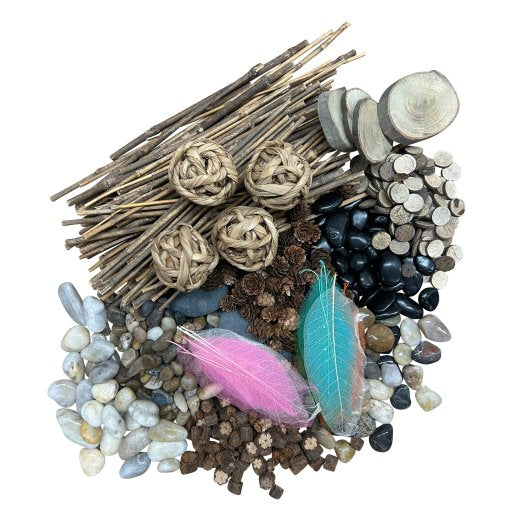
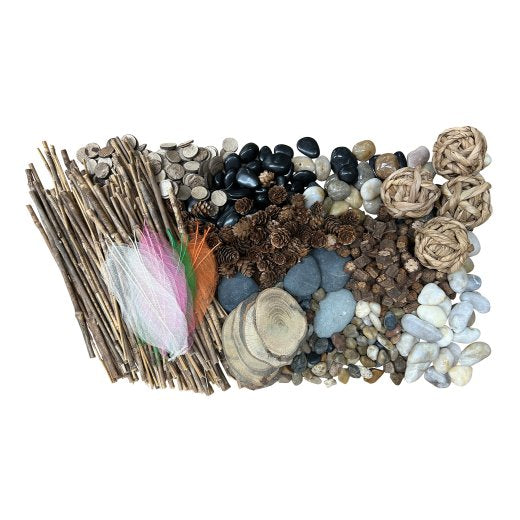
The Natural Sorting Materials Kit includes a varied collection of natural components:
- Skeleton leaves
- Rattan balls
- Rattan slices
- Long bamboo sticks
- River pebbles
- Polished black stones
- Polished assorted stones
- Polished white stones
- Assorted pine cones
- Flat stones
- Wood slices
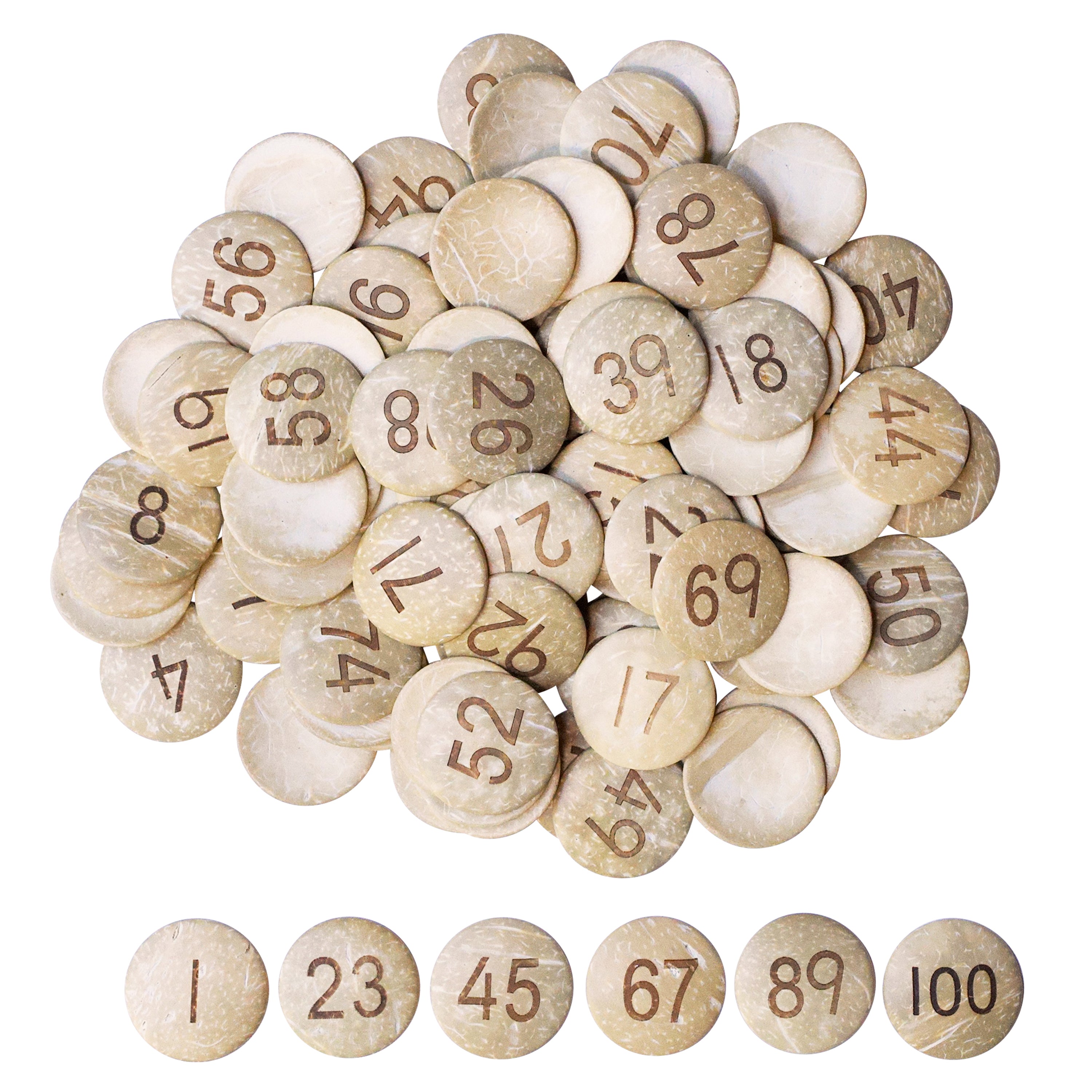
- Coconut shell circles
With a variety of natural textures, colors, shapes, and materials, children have multiple characteristics to observe, compare, sort, and classify.
Hands-On Sorting & Classification
Invite preschoolers to examine the natural objects and decide how they can be organized.
Children can sort by color, material, texture, shape, size, or other observable characteristics, then compare their groups and explain what they notice. These activities encourage early classification, observation, logical thinking, and problem-solving.
Build Early Math Skills
Natural loose parts turn foundational math concepts into concrete experiences children can see and manipulate.
Use the materials for counting, grouping, comparing, sorting, classification, and pattern-making. Children can count selected objects, compare groups, create repeating patterns, or develop their own ways to organize the materials.
Sensory Exploration with Natural Textures
From smooth polished stones to textured pine cones, delicate skeleton leaves, wood slices, bamboo, rattan, and coconut shell pieces, the collection provides a diverse range of tactile and visual characteristics.
Children can touch, examine, compare, arrange, and describe the materials while exploring concepts such as smooth and rough, light and heavy, large and small, and similarities and differences.
STEM & Scientific Discovery
The assortment encourages children to approach natural objects as young investigators.
Teachers can invite children to observe, compare, classify, predict, ask questions, and describe what they discover. These hands-on experiences support early scientific reasoning while introducing children to the characteristics of rocks, plant materials, wood, and other natural objects.
Open-Ended Loose Parts Play
Natural loose parts have no single predetermined use, allowing children to decide how the materials become part of their learning and play.
Children can stack stones, arrange patterns, build landscapes, create temporary artwork, make collections, construct imaginative environments, or develop their own designs. This flexibility encourages creativity, experimentation, and child-directed discovery.
Nature Study & Environmental Exploration
Real natural materials provide opportunities for meaningful conversations about the world around us.
Educators can use the kit to introduce discussions about rocks, plants, trees, leaves, wood, natural textures, and material properties. Children can compare objects and develop descriptive vocabulary as they investigate where different natural materials come from and how they differ.
Pattern-Making & Creative Design
Combine early mathematics with creativity by inviting children to arrange the loose parts into repeating patterns, symmetrical designs, pictures, temporary art, landscapes, and other configurations.
The variety of shapes, colors, and textures provides numerous possibilities for child-directed design and teacher-guided pattern activities.
Fine Motor & Hands-On Learning
Picking up, placing, stacking, arranging, sorting, and repositioning the different natural pieces provides opportunities for fine motor practice, hand-eye coordination, and controlled hand movements.
Children can manipulate the materials independently, with classmates, or during teacher-guided activities.
Cross-Curricular Classroom Resource
The Natural Sorting Materials Kit can be used across multiple preschool learning areas, making it a versatile resource for math, science, STEM, sensory, art, and creative play.
Move the materials between a sorting station, nature table, sensory center, STEM area, math center, or art space to support different classroom activities and learning objectives.
Eco-Friendly Natural Materials
The kit is made from eco-friendly natural materials that are described as non-toxic and tested to meet current international toy safety standards.
Because the collection contains varied natural loose parts, it is recommended for children ages 3 years and up and should be used in an age-appropriate manner under educator supervision.
Supports Early Childhood Learning Standards
The Natural Sorting Materials Kit complements early childhood experiences involving approaches to learning, cognition, early mathematics, scientific reasoning, sensory exploration, fine motor development, and creative arts expression.
The collection correlates with Head Start Domains including Approaches to Learning, Cognition, Perceptual, Motor, and Physical Development, Scientific Reasoning, and Creative Arts Expression. It also supports relevant ECERS areas involving Nature/Science, Fine Motor, Art, Math/Number, and child-directed free play and aligns with NAEYC developmentally appropriate practices through hands-on exploration, creativity, problem-solving, sensory discovery, and meaningful interaction with natural materials.
Key Features
- 12 Natural Material Types: Includes skeleton leaves, rattan balls, rattan slices, bamboo sticks, river pebbles, polished stones, pine cones, flat stones, wood slices, and coconut shell circles.
- Sorting & Classification: Children can organize materials by color, texture, shape, size, material, and other observable characteristics.
- Early Math Learning: Supports counting, grouping, comparing, sorting, classification, patterns, and other foundational math activities.
- Hands-On STEM Exploration: Encourages observation, investigation, comparison, prediction, problem-solving, and scientific reasoning.
- Sensory Discovery: Varied natural textures, shapes, colors, sizes, and weights provide opportunities for tactile and visual exploration.
- Nature Study: Gives children hands-on opportunities to investigate and compare real natural materials.
- Open-Ended Loose Parts Play: Children can sort, stack, arrange, pattern, build, design, and create using the assortment.
- Creative Learning: Suitable for temporary art, nature-inspired designs, pattern-making, imaginative environments, and supervised crafting activities.
- Fine Motor Practice: Manipulating, arranging, stacking, and sorting the materials encourages controlled hand movements and hand-eye coordination.
- Cross-Curricular Resource: Ideal for math centers, STEM areas, science centers, sensory activities, nature tables, art areas, and discovery centers.
- Eco-Friendly Materials: Made with a varied assortment of natural materials for hands-on early childhood learning.
- Safety Tested: Materials are described as non-toxic and tested to meet current international toy safety standards.
- Age Grade: Recommended for ages 3+, with age-appropriate use under educator supervision.
Frequently Asked Questions
What is included in the Natural Sorting Materials Kit?
The kit includes 12 types of natural materials: skeleton leaves, rattan balls, rattan slices, long bamboo sticks, river pebbles, polished black stones, polished assorted stones, polished white stones, assorted pine cones, flat stones, wood slices, and coconut shell circles.
What can children learn with a natural sorting materials kit?
Children can explore counting, sorting, classification, comparing, patterns, textures, observation, scientific reasoning, sensory discovery, and creative problem-solving.
How can the materials be used for sorting activities?
Children can sort and classify the pieces according to material, color, shape, size, texture, or other observable characteristics.
How can the Natural Sorting Materials Kit support early math?
The loose parts can be used for counting, grouping, comparing quantities, sorting, classification, and creating or extending patterns.
How can this set be used for STEM and science activities?
Children can investigate the physical characteristics of different natural materials by observing, comparing, classifying, describing, and asking questions about what they discover.
Can the materials be used for sensory exploration?
Yes. The collection contains a variety of textures, surfaces, shapes, sizes, colors, and weights that can be compared and explored through supervised tactile and visual activities.
Can the Natural Sorting Materials Kit be used for loose parts play?
Yes. Children can use the open-ended materials for sorting, stacking, arranging, pattern-making, temporary art, building, imaginative environments, and child-directed discovery.
Can the natural materials be used for art activities?
Yes. The assortment can be incorporated into temporary artwork, nature-inspired designs, patterns, creative arrangements, and supervised crafting activities.
Are the natural materials non-toxic?
According to the supplied product information, the materials are non-toxic and tested to meet current international toy safety standards.
What age is the Natural Sorting Materials Kit recommended for?
The set is recommended for children ages 3 years and up and should be used in an age-appropriate manner under educator supervision.
- 12 Types of Natural Materials: Includes skeleton leaves, rattan balls and slices, bamboo sticks, river pebbles, polished stones, pine cones, flat stones, wood slices, and coconut shell circles for hands-on discovery.
- Sorting & Early Math Learning: Children can count, sort, group, classify, compare, and create patterns while exploring differences in color, texture, shape, size, and material.
- Sensory STEM Exploration: Varied natural objects encourage tactile exploration, observation, investigation, prediction, problem-solving, and scientific reasoning through hands-on learning.
- Open-Ended Loose Parts Play: Use the natural materials for stacking, arranging, pattern-making, nature study, temporary art, creative designs, imaginative environments, and child-directed exploration.
- Cross-Curricular Classroom Resource: Ideal for preschool math centers, STEM areas, science centers, sensory activities, nature tables, art areas, and discovery centers. Materials are described as eco-friendly, non-toxic, and tested to current international toy safety standards. Ages 3+; use under educator supervision.
Choose options

Why Choose Us
What Makes Constructive Playthings Better?

Experienced
For the past 70 years, each product is selected based on our knowledge of early childhood education combined with research insights, observations of young children in the classroom, and feedback from our customers

Full Service
Our full-service team is available to take you through the entire purchasing process. We have been supplying early-childhood educators with quality products for over 70 years! Connect with us and we can help you with planning, budgeting, designing, and ordering.

Quality Commitment
We stand behind every one of our products and are confident they will become high-caliber additions to any classroom or home. We are committed to offering sustainable solutions for educators. In addition to constantly seeking out new ways to create products that will encourage the longevity of our planet, we have taken steps to build an eco-friendly workplace.

Resource Guidelines
We are dedicated to staying up to date and providing early childhood educators with the resources they need. We update our classroom layouts and guides as new criteria and product offerings evolve, and ensure all materials within these guides meet NAEYC, ITERS-3, ECERS-3, and Head Start standards.
@ConstructivePlaythings
We believe in Learning through Play!
Share your play time with us! @ConstructivePlaythings