
Ladybug Life Cycle Wooden Knob Puzzle | 4-Stage Ladybug Metamorphosis & Early Science Learning Toy
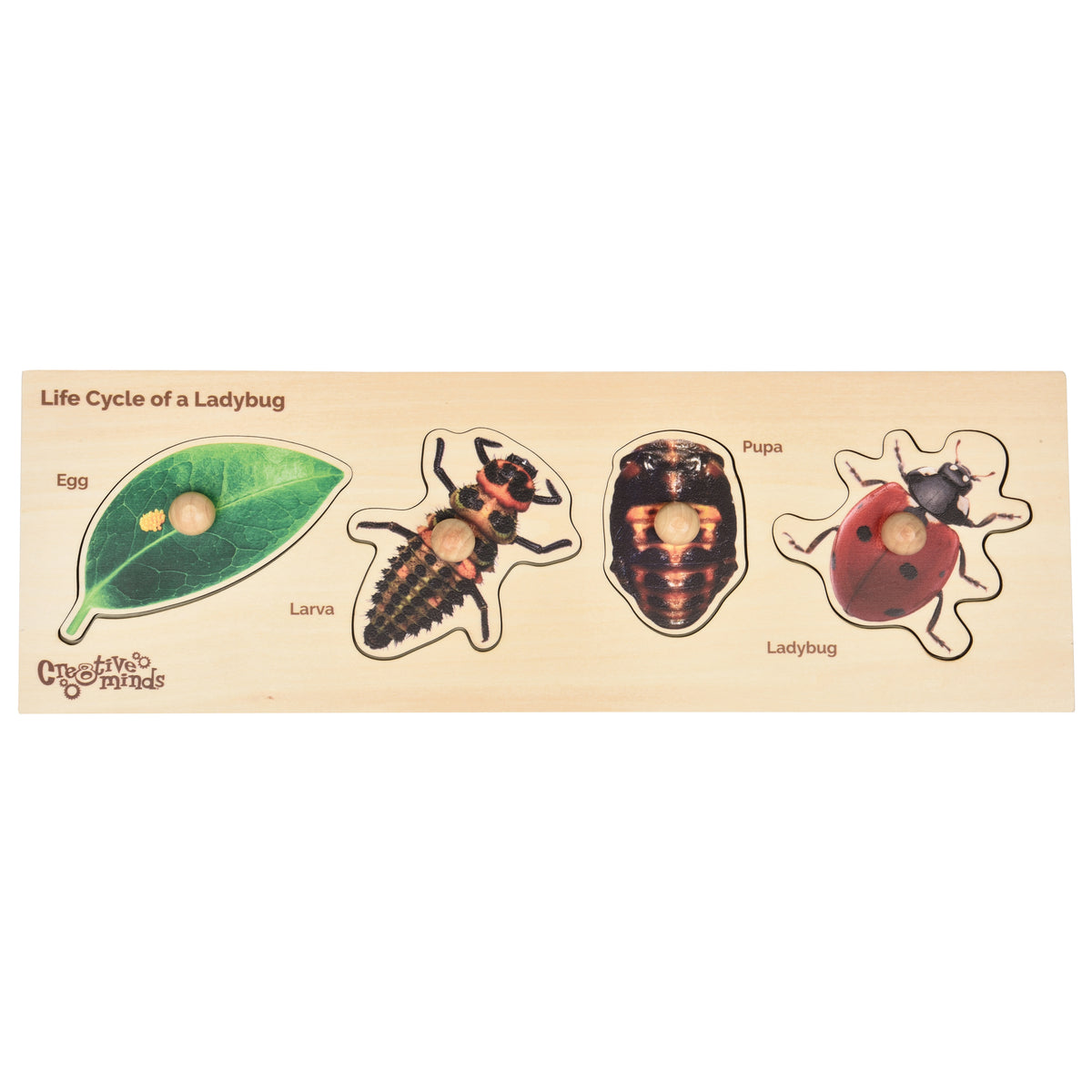
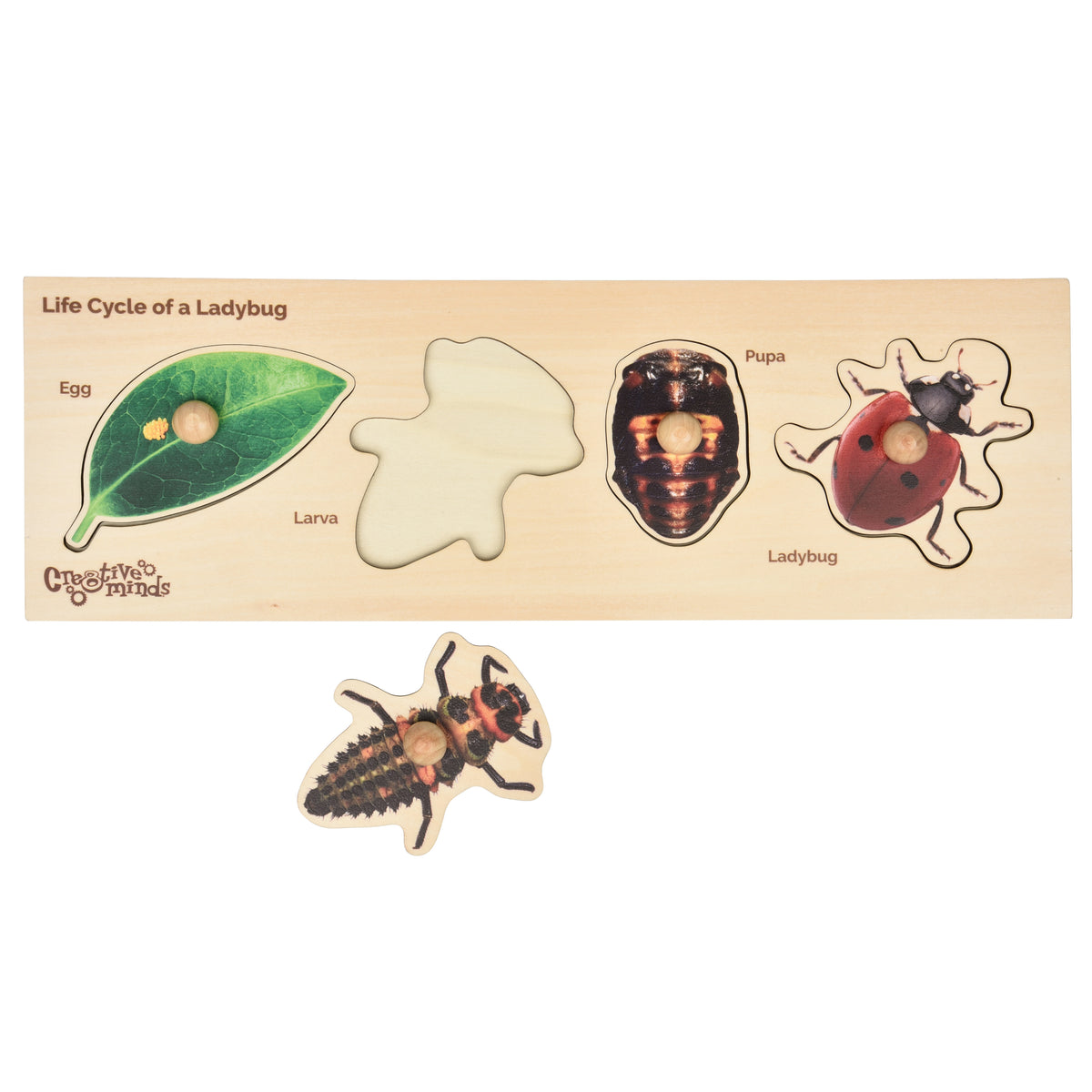
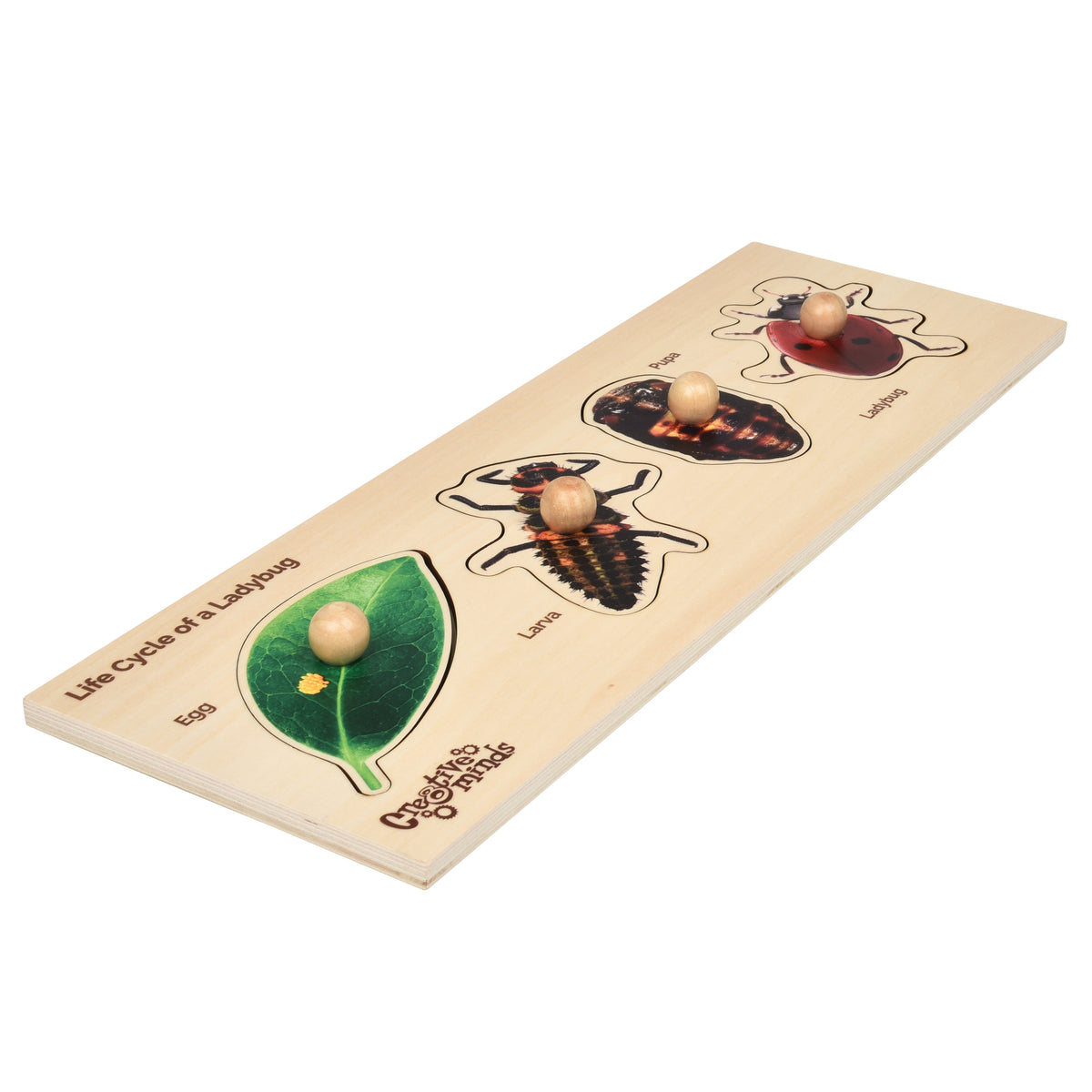
Discover the fascinating world of insects and nature with the Ladybug Life Cycle Wooden Knob Puzzle, an engaging educational toy designed to introduce toddlers and preschoolers to the amazing transformation of a ladybug. Featuring four beautifully illustrated wooden puzzle pieces with easy-to-grasp knobs, this hands-on learning activity helps children explore the four stages of a ladybug's life cycle—egg, larva, pupa, and adult ladybug while developing fine motor skills, hand-eye coordination, sequencing abilities, and early scientific thinking.
Designed for early childhood classrooms, preschool science centers, daycare programs, and home learning environments, this nature-inspired wooden puzzle encourages children ages 2 years and up to explore insect life cycles, growth, and metamorphosis through interactive discovery and independent puzzle play.
Explore the Four Stages of Ladybug Metamorphosis
Introduce young learners to the remarkable transformation of a ladybug with a realistic visual representation of its four-stage life cycle.
As children explore the illustrated wooden puzzle pieces, they discover each stage of ladybug development:
- Egg: Learn how a ladybug's life begins as a tiny egg, often laid in clusters on leaves.
- Larva: Discover how the larva hatches, feeds, and grows while developing its distinctive elongated body.
- Pupa: Explore the stage when the larva undergoes its transformation into an adult ladybug.
- Adult Ladybug: See how the fully developed ladybug emerges with its recognizable rounded body and spotted wings.
This interactive learning experience introduces children to complete metamorphosis, sequencing, insect development, and basic biology, helping build a foundation for early science education.
Develops Fine Motor Skills and Hand-Eye Coordination
The Ladybug Life Cycle Puzzle features four large wooden pieces with easy-to-grasp knobs, making it ideal for toddlers and young preschoolers developing essential motor skills.
As children grasp, lift, position, and replace each puzzle piece, they practice fine motor control, hand-eye coordination, finger dexterity, and visual-spatial awareness.
The child-friendly knob design supports independent exploration while helping young learners develop confidence, concentration, and coordination through successful puzzle completion.
Encourages Sequencing, Problem-Solving, and Critical Thinking
Understanding how a ladybug develops from an egg into an adult introduces children to logical sequencing, cause-and-effect relationships, and early problem-solving skills.
Children can identify each life cycle stage, discuss what happens next, and explore how living things grow and change over time.
Matching the wooden pieces to their corresponding spaces also strengthens shape recognition, visual discrimination, spatial reasoning, and concentration.
Through hands-on exploration, young learners begin connecting scientific concepts with real-world observations while developing foundational cognitive skills.
Supports Nature Exploration and Early STEM Learning
The Ladybug Life Cycle Wooden Knob Puzzle provides an engaging introduction to life science, entomology, insect biology, and nature-based STEM activities.
Teachers and caregivers can use the puzzle to encourage discussions about ladybugs, beneficial insects, garden habitats, metamorphosis, and the natural world.
Pairing the puzzle with insect-themed books, garden observations, nature walks, or classroom science lessons creates additional opportunities to build scientific vocabulary, observation skills, curiosity, and early reasoning abilities.
The realistic artwork helps children recognize the physical characteristics of each developmental stage, making abstract biological concepts easier to understand through visual and tactile learning.
Durable Wooden Construction for Hands-On Learning
Crafted from wood and featuring realistic, detailed illustrations, this educational puzzle combines durability with an engaging, child-friendly design.
The four wooden pieces feature easy-grip knobs designed for small hands, making the puzzle a practical addition to toddler learning spaces, preschool science centers, and classroom discovery areas.
Whether used for independent puzzle play, small-group instruction, or nature-themed learning activities, the Ladybug Life Cycle Puzzle encourages meaningful exploration, early scientific discovery, and learning through play.
Frequently Asked Questions (FAQ)
What is the Ladybug Life Cycle Wooden Knob Puzzle?
The Ladybug Life Cycle Wooden Knob Puzzle is an educational wooden puzzle featuring four illustrated pieces that introduce children to the stages of ladybug metamorphosis through hands-on learning.
What are the four stages of the ladybug life cycle?
The four stages are egg, larva, pupa, and adult ladybug. The puzzle helps children recognize these stages and understand how ladybugs grow and transform throughout their lives.
What age group is the Ladybug Life Cycle Puzzle recommended for?
The puzzle is recommended for children ages 2 years and up, making it suitable for toddlers, preschoolers, and early childhood learning environments.
How many puzzle pieces are included?
The puzzle includes four wooden pieces, each featuring a realistic illustration of a ladybug life cycle stage and an easy-to-grasp wooden knob.
What developmental skills does the puzzle support?
The puzzle encourages fine motor skills, hand-eye coordination, visual discrimination, spatial awareness, sequencing, concentration, and early problem-solving abilities.
How does the puzzle help children learn science?
Children explore ladybug metamorphosis, insect development, life cycle sequencing, and biological changes through realistic illustrations and hands-on puzzle play. These experiences introduce foundational life science and early STEM concepts.
Are the puzzle pieces easy for toddlers to handle?
Yes. The puzzle features large wooden pieces with easy-to-grasp knobs designed to help little hands lift, position, and manipulate each piece.
Can this puzzle be used in preschool science centers?
Yes. The Ladybug Life Cycle Puzzle is ideal for preschool science centers, insect-themed lessons, classroom discovery areas, daycare programs, and home learning activities.
Does the puzzle encourage independent learning?
Yes. Its child-friendly wooden pieces and easy-grip knobs encourage children to explore, match, and complete the puzzle independently while developing confidence and problem-solving skills.
What is the difference between a ladybug larva and an adult ladybug?
A ladybug larva has an elongated, segmented body and often features dark coloring with distinctive markings. An adult ladybug has a rounded body with hardened wing covers, often displaying the familiar red or orange coloring and black spots.
Can the puzzle support insect-themed classroom activities?
Absolutely. Teachers can incorporate the puzzle into lessons about insects, beneficial garden creatures, animal life cycles, metamorphosis, nature observation, and seasonal science exploration.
- 4-STAGE LADYBUG LIFE CYCLE PUZZLE: Introduces children to the egg, larva, pupa, and adult ladybug stages through four realistically illustrated wooden puzzle pieces.
- DEVELOPS FINE MOTOR SKILLS: Large wooden pieces with easy-to-grasp knobs encourage hand-eye coordination, finger dexterity, and fine motor control.
- BUILDS SEQUENCING & PROBLEM-SOLVING: Helps children explore life cycle order, growth, change, spatial reasoning, and logical thinking through interactive puzzle play.
- SUPPORTS EARLY SCIENCE & STEM LEARNING: Encourages curiosity about insects, ladybug metamorphosis, beneficial garden creatures, and basic biology concepts.
- DURABLE WOODEN PUZZLE | AGES 2+: Ideal for toddler classrooms, preschool science centers, daycare programs, insect-themed activities, and home learning.
Choose options
Inspiration & Resources
Why Choose Us
What Makes Constructive Playthings Better?

Experienced
For the past 70 years, each product is selected based on our knowledge of early childhood education combined with research insights, observations of young children in the classroom, and feedback from our customers

Full Service
Our full-service team is available to take you through the entire purchasing process. We have been supplying early-childhood educators with quality products for over 70 years! Connect with us and we can help you with planning, budgeting, designing, and ordering.

Quality Commitment
We stand behind every one of our products and are confident they will become high-caliber additions to any classroom or home. We are committed to offering sustainable solutions for educators. In addition to constantly seeking out new ways to create products that will encourage the longevity of our planet, we have taken steps to build an eco-friendly workplace.

Resource Guidelines
We are dedicated to staying up to date and providing early childhood educators with the resources they need. We update our classroom layouts and guides as new criteria and product offerings evolve, and ensure all materials within these guides meet NAEYC, ITERS-3, ECERS-3, and Head Start standards.
@ConstructivePlaythings
We believe in Learning through Play!
Share your play time with us! @ConstructivePlaythings