
Butterfly Path Sensory Balance Stepping Stones | Dual-Motion Wobble Path with Connectable Pieces
Turn active play into a dynamic balance and movement experience with the Butterfly Path Sensory Balance Stepping Stones, a versatile gross motor activity designed for children ages 2 years and up. Featuring butterfly-shaped stepping pieces with two different wobbling motions, this engaging balance system challenges children to step, stabilize, shift their weight, and adjust their movements while developing balance, coordination, gross motor skills, body awareness, spatial awareness, and confidence.
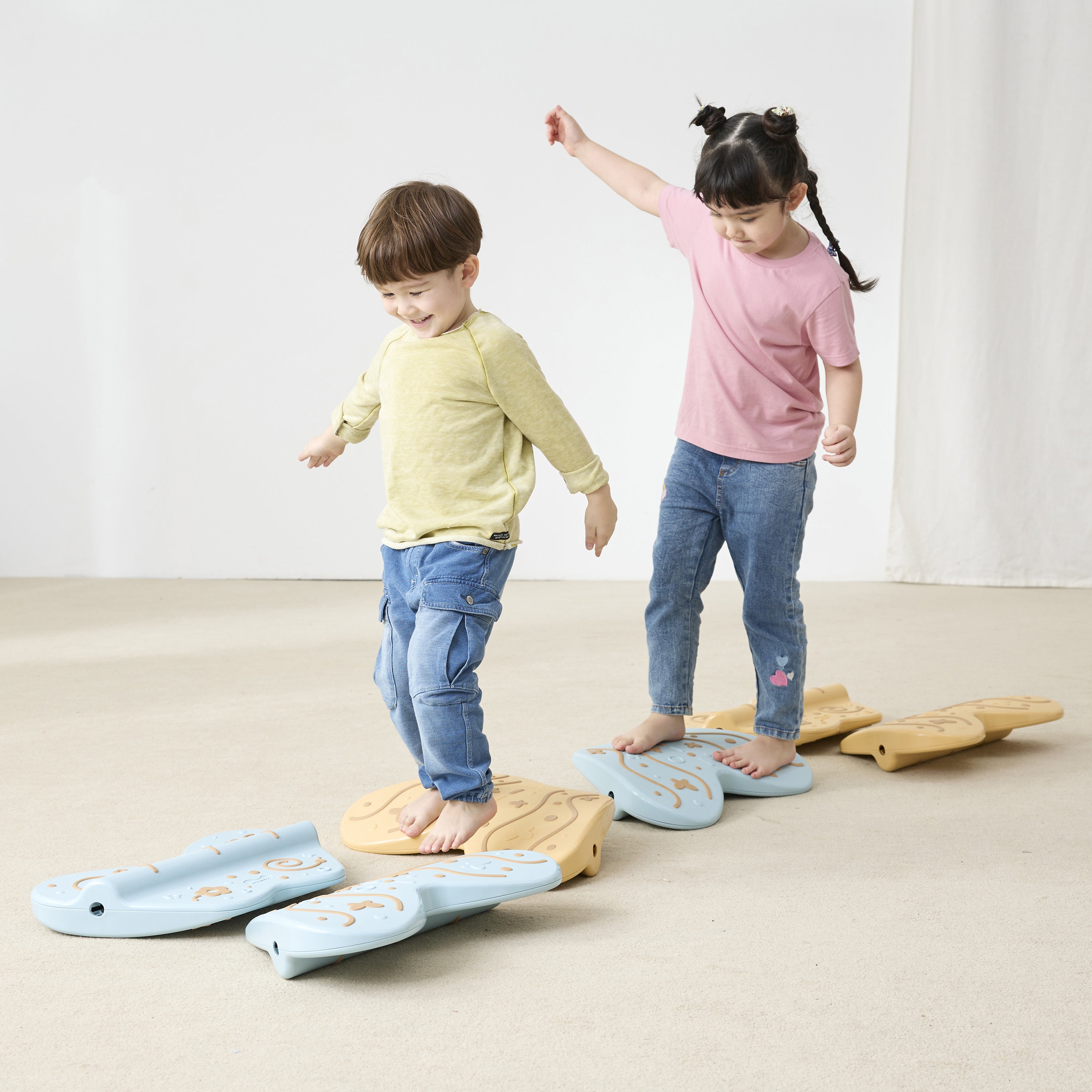
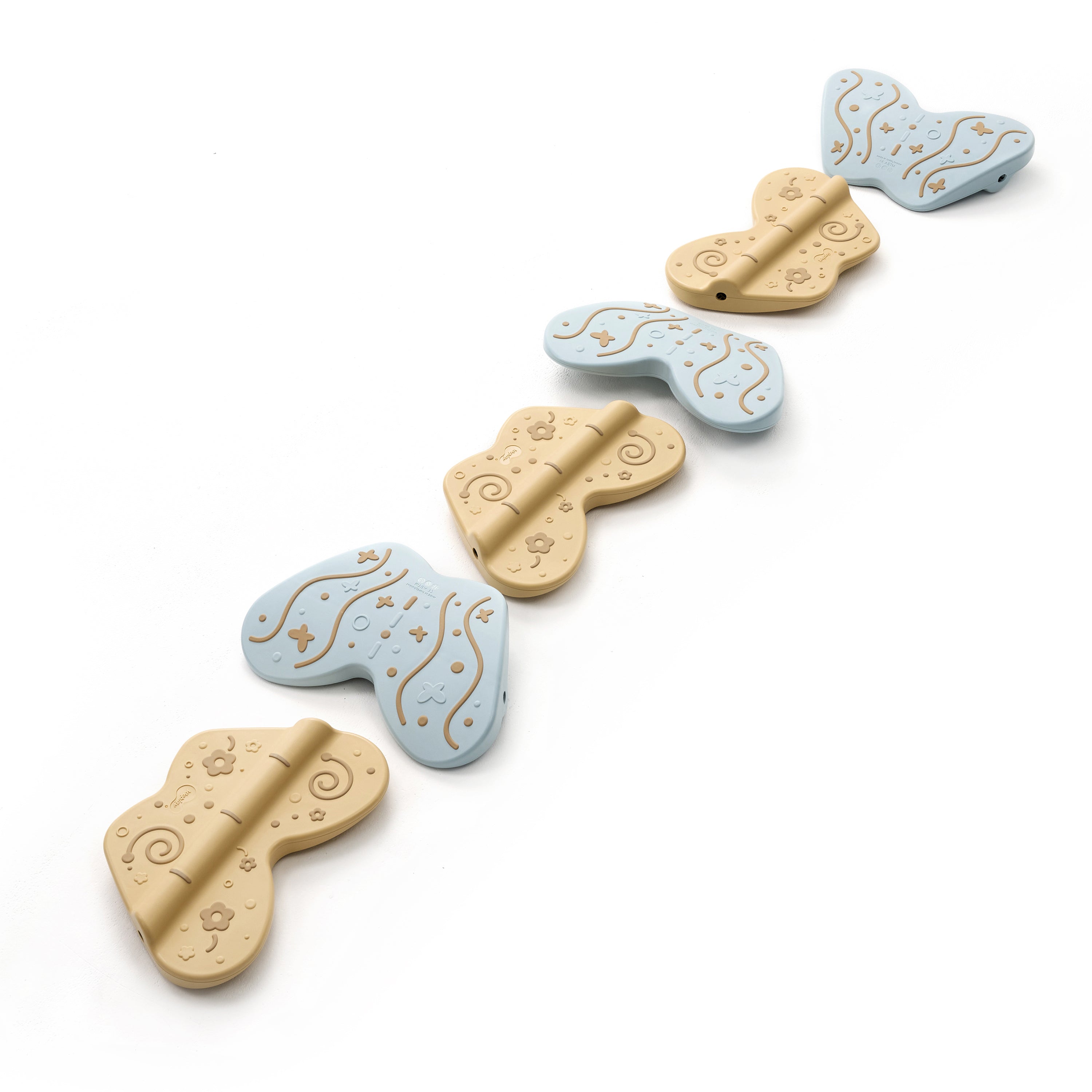
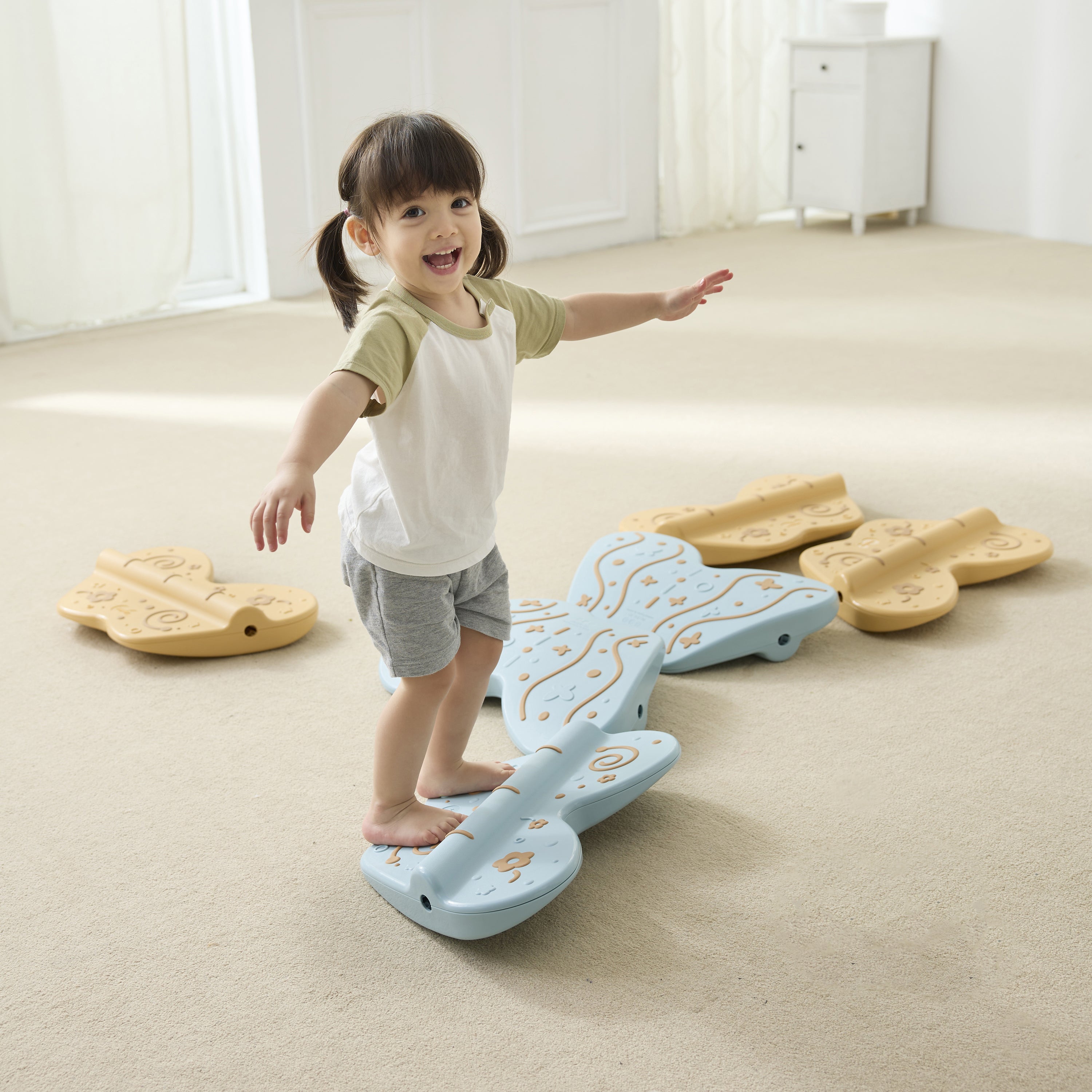
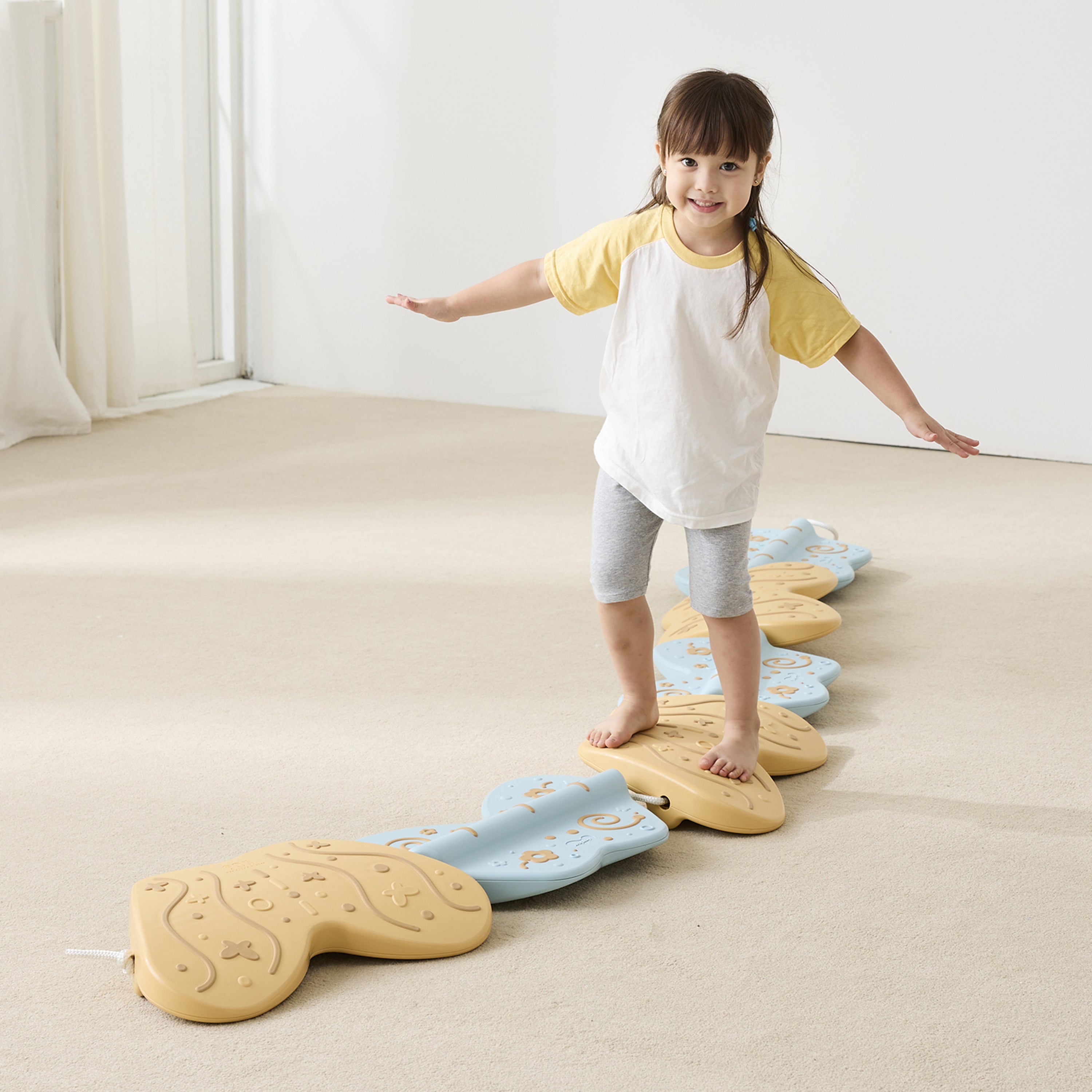
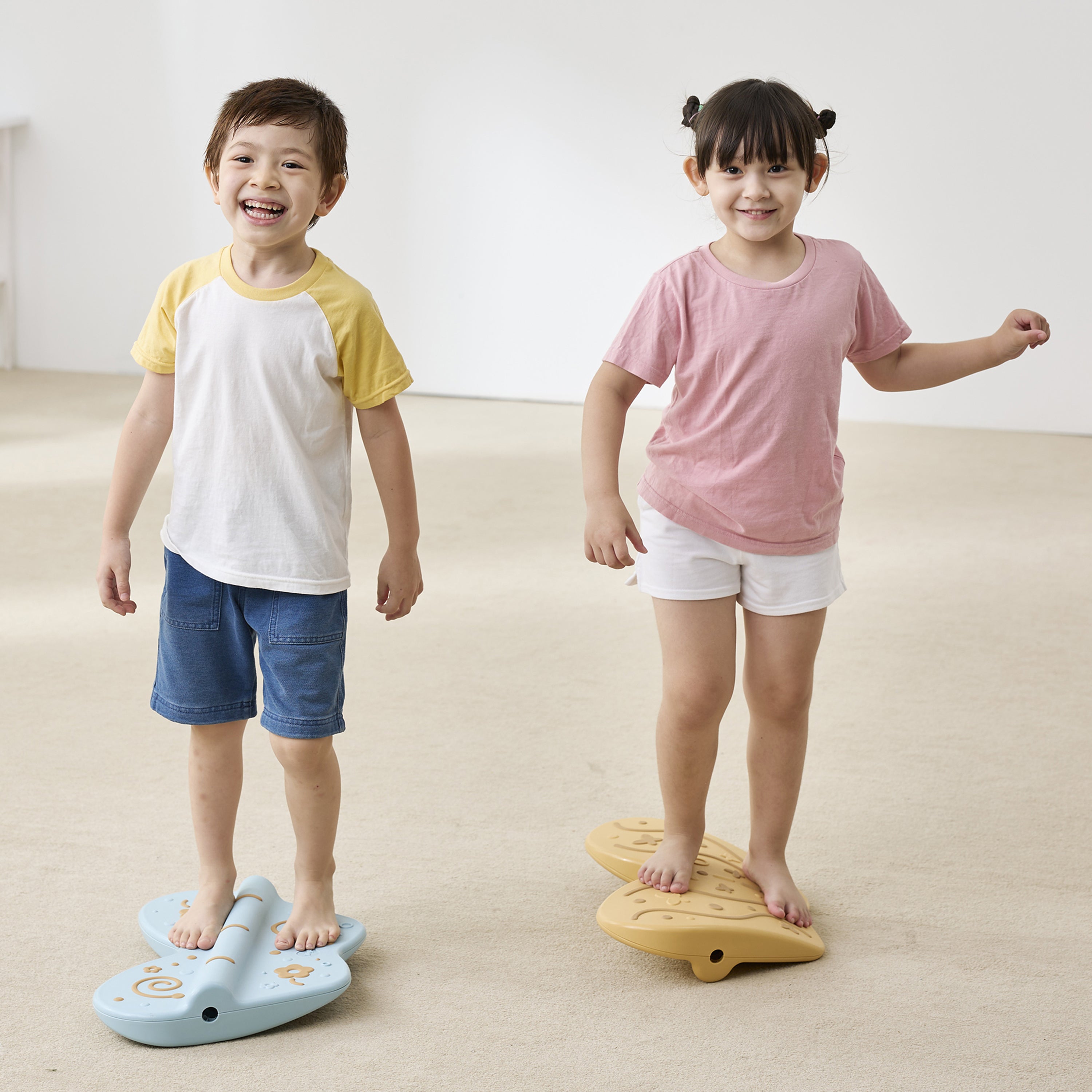
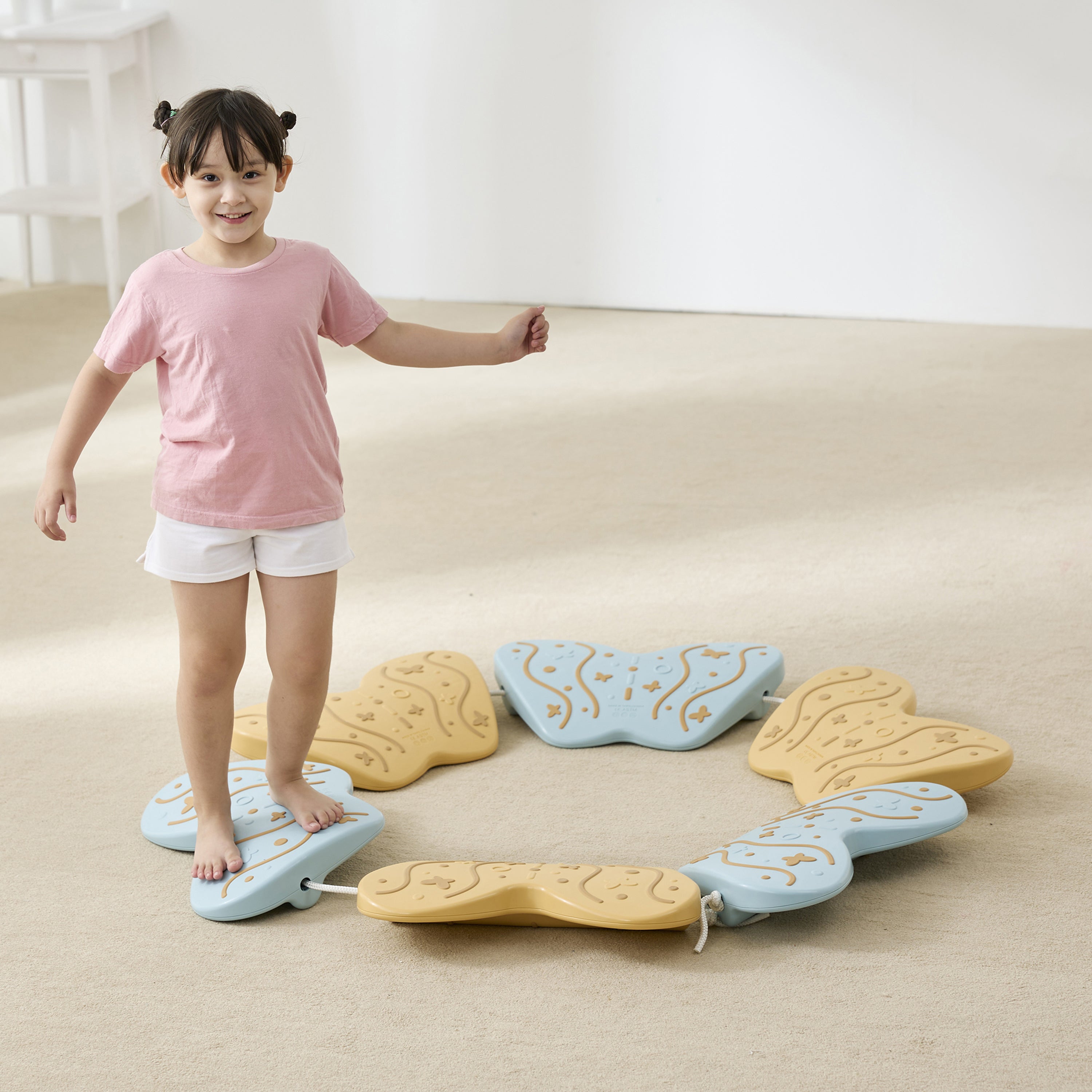
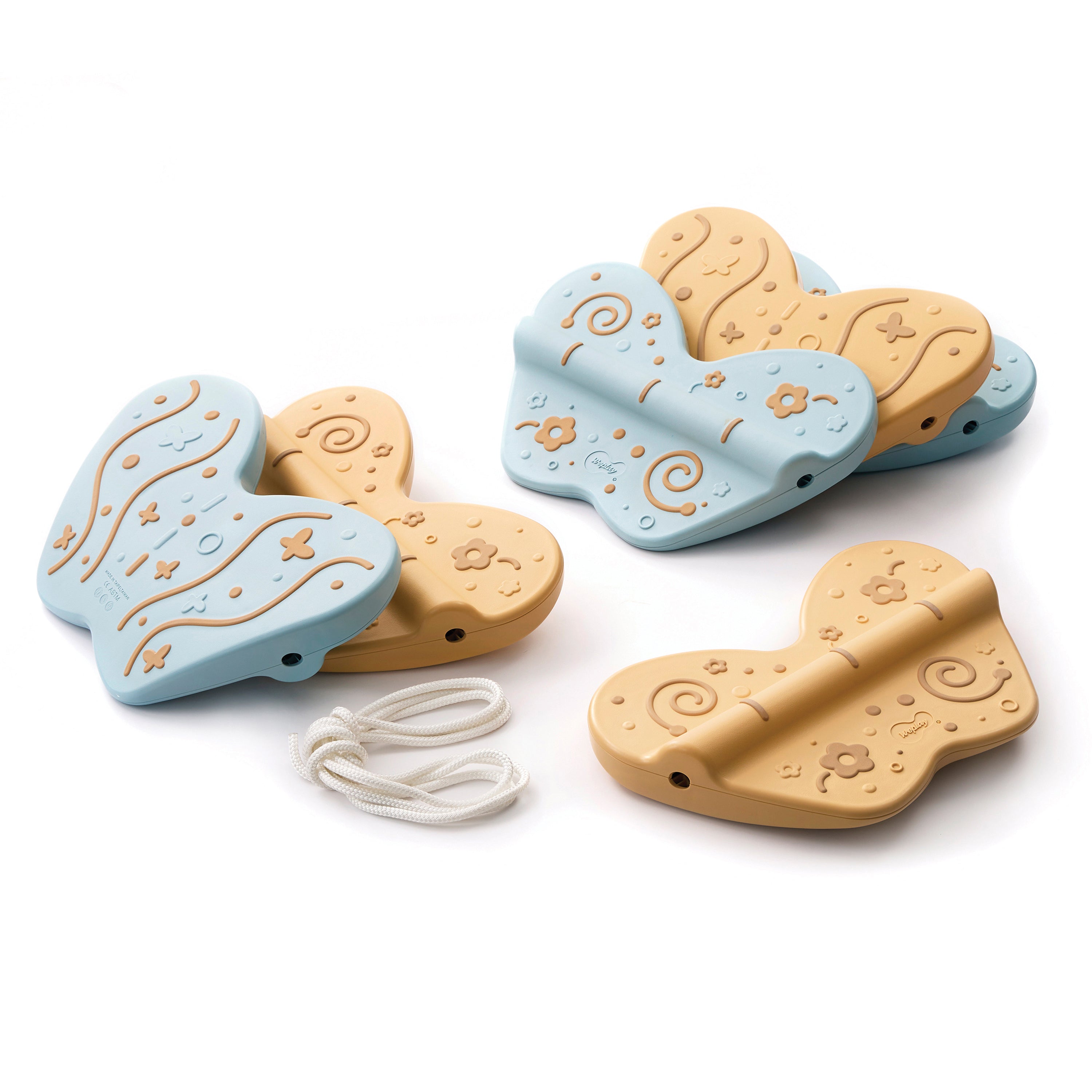
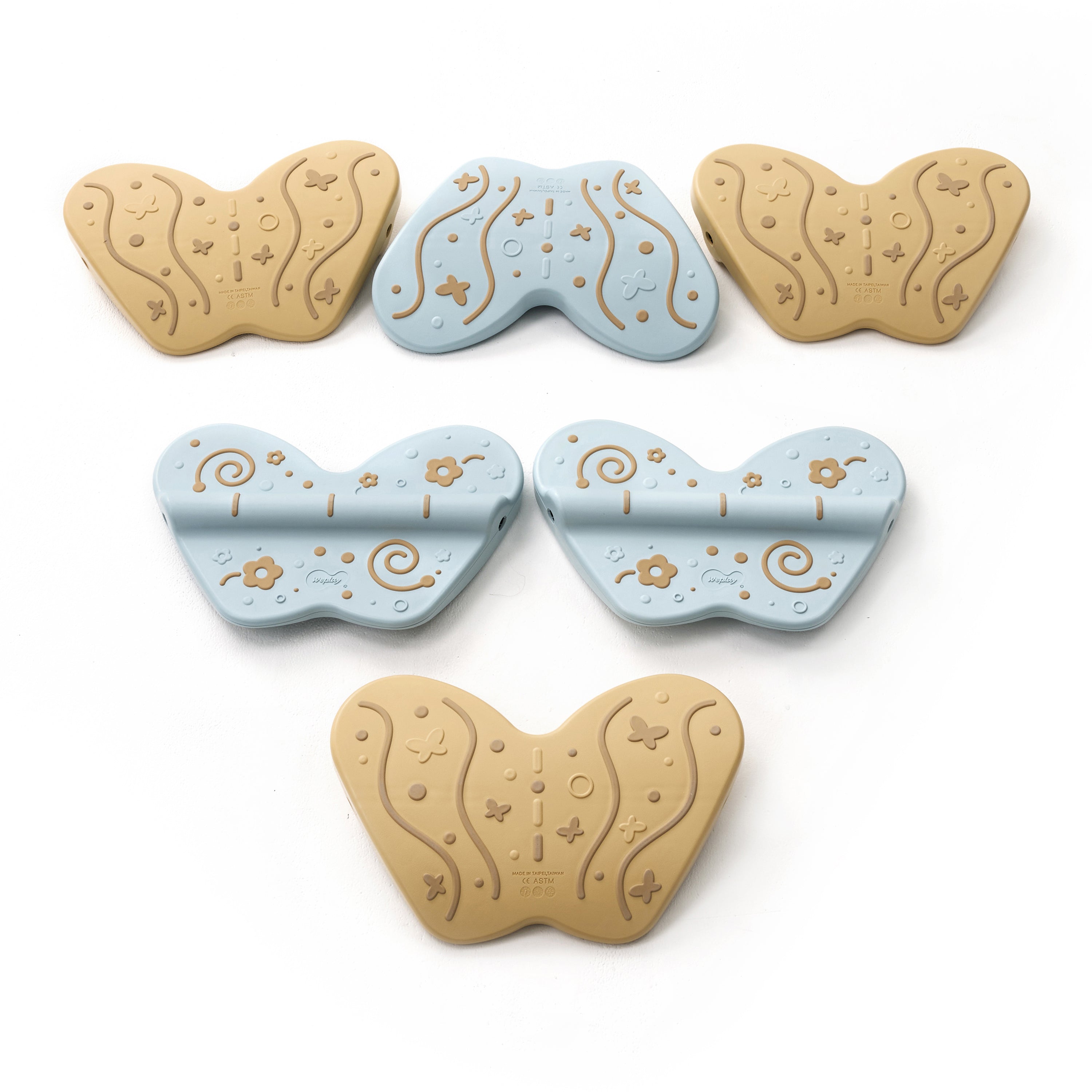
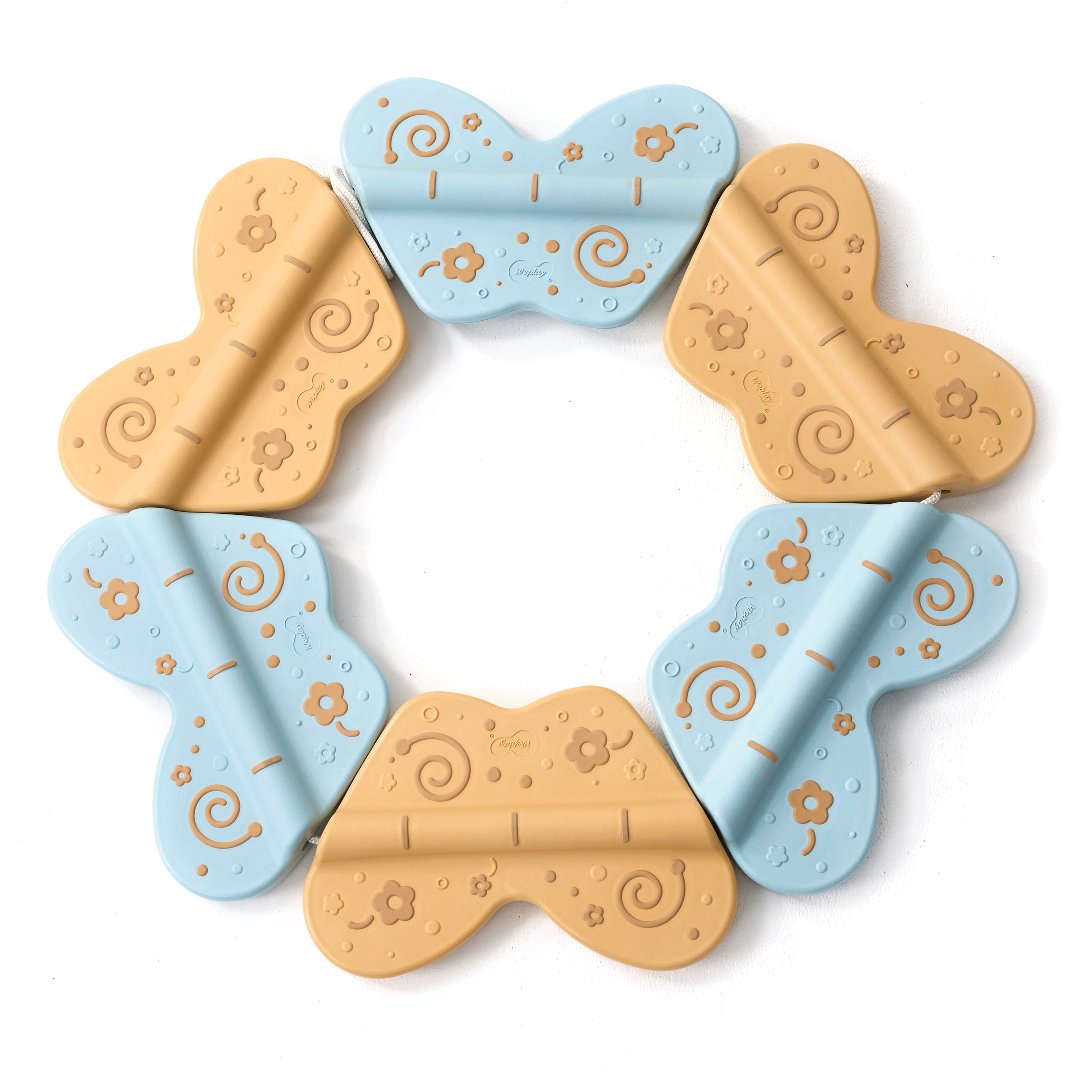
Each butterfly offers two distinct movement experiences depending on how it is positioned. One side moves up and down like a seesaw, while the opposite side features an arc-shaped base that creates a gentle wobbling motion. The pieces can be used individually or connected with a rope to create customized balance paths, sensory trails, movement activities, and obstacle courses.
Ideal for classrooms, gross motor areas, sensory spaces, therapy settings, early learning environments, and home play, the Butterfly Path encourages children to explore movement while responding to shifting surfaces and changing balance challenges.
Dual-Motion Balance Stepping Stones
Each butterfly provides two different wobbling motions, allowing children to experience varied balance challenges with the same equipment.
Depending on which side is used, children can explore:
- Seesaw Motion: Moves up and down as children shift their weight.
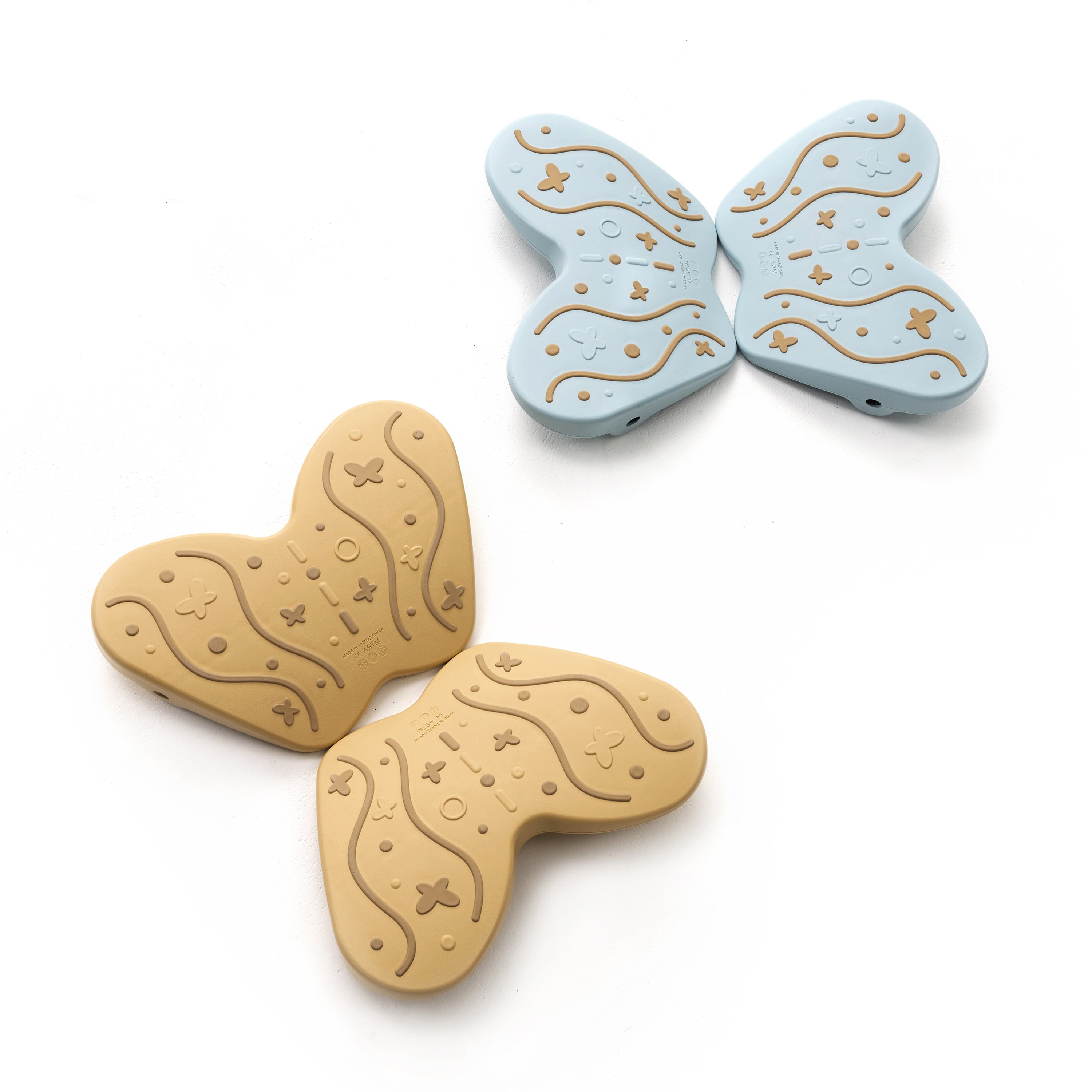
- Arc Wobble Motion: Gently rocks and wobbles on the curved base.
Changing between the two positions introduces different movement patterns and encourages children to continually adjust their posture and balance.
Seesaw Balance Challenge
Position the butterfly to create an up-and-down seesaw movement.
As children step onto the moving surface, they must respond to the shifting position by adjusting their weight and body movements.
This dynamic activity provides opportunities to practice balance, coordination, stability, weight shifting, and controlled movement.
Arc-Based Wobble Motion
Flip the butterfly to use the arc-shaped base, creating a different gentle wobbling experience.
The curved surface introduces movement as children stand, step, and balance, encouraging them to make continuous adjustments to maintain their position.
Using both motion options gives children varied ways to experience balance and movement challenges.
Use Individually or Connect with a Rope
The Butterfly Path pieces offer flexible setup options for different activities.
Use individual butterflies as separate balance stations, or connect the pieces with a rope to create a continuous movement path.
Educators, caregivers, and activity leaders can change the arrangement to create new challenges and adapt activities for different spaces and play experiences.
Create Custom Balance Paths
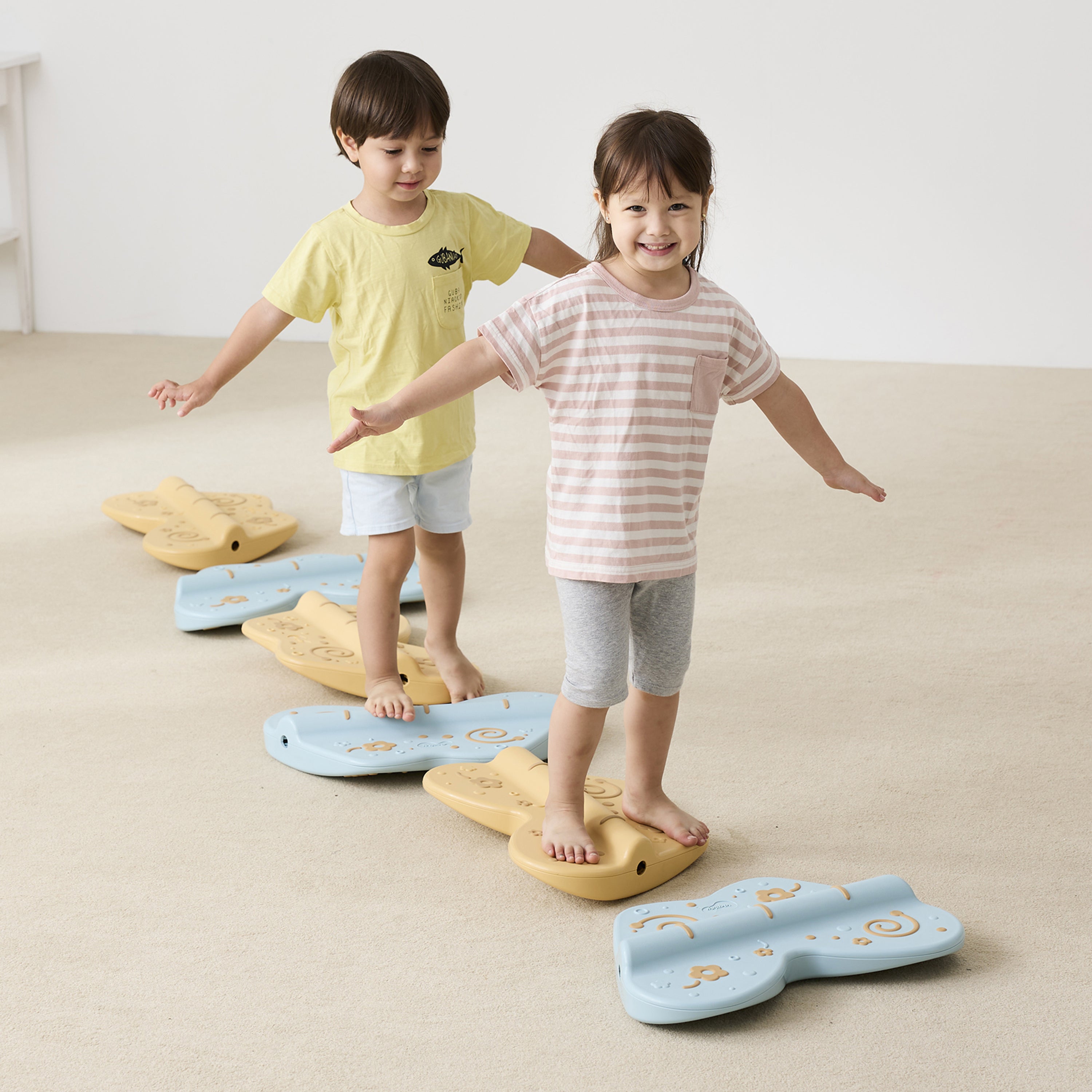
Connected Butterfly Path pieces can be arranged to create engaging routes for children to follow.
Change the placement, spacing, or direction of the butterflies to create different movement experiences and encourage children to plan how they will travel from one piece to the next.
Changing the path helps keep gross motor activities varied and engaging.
Build Indoor Obstacle Courses
Incorporate the Butterfly Path into an obstacle course with other appropriate gross motor equipment.
Children can step, balance, pause, change direction, and transition between activities as they navigate the course.
Obstacle course activities encourage children to combine balance, coordination, movement planning, spatial awareness, and gross motor control.
Gross Motor Skill Development
Stepping onto and moving across shifting surfaces requires children to engage their whole body.
Butterfly Path activities provide opportunities to practice:
- Balance
- Coordination
- Stability
- Weight shifting
- Controlled stepping
- Gross motor planning
- Body positioning
- Direction changes
These movements encourage active physical exploration while presenting developmentally engaging challenges.
Balance & Stability Practice
Unlike a stationary stepping surface, the Butterfly Path responds to a child's movements.
As the butterfly shifts, children must adjust their body position to remain balanced. These repeated adjustments provide opportunities to practice dynamic balance and stability during active play.
Coordination & Controlled Movement
Navigating a wobbling path requires children to coordinate multiple movements at once.
They may need to lift a foot, step onto the butterfly, shift their weight, stabilize their body, and prepare for the next movement.
This process encourages greater awareness and control of whole-body movements.
Body Awareness
The moving surfaces encourage children to pay attention to how their bodies are positioned.
As they balance, children can become more aware of foot placement, weight distribution, posture, and movement, helping them explore how different body adjustments affect their stability.
Spatial Awareness
Moving from one butterfly to another encourages children to consider distance, direction, position, and available space.
Different arrangements can challenge children to determine where to place their feet and how to move their bodies as they travel along the path.
Movement Planning
Before stepping onto the next butterfly, children may need to consider how far to step, where to place their foot, and how to shift their weight.
These active challenges encourage motor planning, sequencing, and problem-solving through movement.
Reaction & Adjustment
Because the butterflies wobble and shift, children receive immediate movement feedback when they step onto them.
They must respond by adjusting their posture, foot placement, or weight distribution, creating an engaging activity that encourages reaction, focus, and movement control.
Sensory Movement Exploration
The shifting and wobbling surfaces provide changing movement experiences as children step and balance.
Switching between the seesaw and arc-based positions gives children opportunities to experience different types of motion while actively engaging their bodies.
This makes the Butterfly Path a useful addition to sensory movement activities, gross motor areas, and active learning spaces.
Encourage Focus & Concentration
Navigating a moving balance path requires children to pay attention to their body position and the next step in the sequence.
Children can practice maintaining focus as they move from one butterfly to another and respond to each shifting surface.
Builds Confidence Through Movement
Balance activities allow children to practice physical challenges repeatedly and progress at their own pace.
As children become more familiar with the wobbling movements and successfully navigate different paths, they can build greater confidence in their movement abilities.
Flexible Movement Activities
The Butterfly Path can be incorporated into a variety of activities, including:
- Balance paths
- Sensory trails
- Obstacle courses
- Gross motor stations
- Movement games
- Coordination activities
- Stepping challenges
- Motor planning activities
- Indoor active play
- Structured movement activities
- Open-ended physical play
Different configurations allow the same equipment to support multiple movement experiences.
Structured or Open-Ended Play
Educators and caregivers can create a specific path for children to follow or allow children to explore the butterflies through open-ended movement.
Structured activities can focus on particular movement patterns, while child-led exploration gives children opportunities to experiment with balance and discover how each butterfly responds.
Playful Butterfly Design
The butterfly-inspired shape adds a playful visual element to gross motor activities.
Its inviting design helps transform balance practice into an imaginative movement experience suitable for early childhood environments.
Durable for Repeated Active Play
Designed for repeated movement activities, the Butterfly Path can be incorporated into regular gross motor and sensory play routines.
Its versatile design makes it suitable for active learning environments where equipment may be used for multiple activities and configurations.
Classroom, Therapy & Home Use
The Butterfly Path Sensory Balance Stepping Stones are well suited for:
- Early childhood classrooms
- Preschool environments
- Gross motor areas
- Sensory spaces
- Therapy settings
- Movement centers
- Indoor play spaces
- Home playrooms
The adaptable configuration makes it easy to create different movement challenges based on the available space and activity.
Designed for Children Ages 2 Years+
Recommended for children ages 2 years and up, the Butterfly Path combines balance practice, gross motor movement, coordination, body awareness, spatial awareness, motor planning, and sensory exploration in one versatile activity system.
With two unique wobbling motions and the ability to use pieces individually or connect them with a rope, children can experience changing balance challenges through active play.
Key Features
- Dual-Motion Balance Design: Each butterfly offers two different wobbling movements for varied balance challenges.
- Seesaw Motion: One side moves up and down like a seesaw as children shift their weight.
- Arc Wobble Motion: The opposite side features an arc-shaped base that creates a gentle wobbling movement.
- Connectable Design: Use pieces individually or connect them with a rope to create customized movement paths.
- Custom Balance Paths: Arrange the butterflies in different configurations for varied stepping and balance activities.
- Obstacle Course Activities: Incorporate the pieces into indoor obstacle courses and gross motor challenges.
- Gross Motor Development: Encourages stepping, balancing, weight shifting, stability, and controlled whole-body movement.
- Balance & Coordination: Moving surfaces challenge children to adjust their position and coordinate their movements.
- Body Awareness: Encourages children to notice foot placement, posture, weight distribution, and body position.
- Spatial Awareness: Stepping between pieces introduces concepts involving distance, direction, position, and space.
- Motor Planning: Children can practice planning where and how to step as they navigate different configurations.
- Reaction & Movement Control: Shifting surfaces encourage children to respond and adjust their movements.
- Sensory Movement: Two wobbling motions provide varied movement experiences during active play.
- Focus & Concentration: Navigating the path encourages attention to body position and movement.
- Flexible Activities: Ideal for balance paths, sensory trails, obstacle courses, movement games, and gross motor stations.
- Versatile Learning Environments: Suitable for classrooms, sensory spaces, therapy settings, early learning environments, and home play.
- Age Grade: Designed for children ages 2 years and up.
Frequently Asked Questions
What are Butterfly Path Sensory Balance Stepping Stones?
They are butterfly-shaped balance pieces designed to provide dynamic wobbling movement as children step, balance, and move across them.
What age is the Butterfly Path designed for?
The Butterfly Path is recommended for children ages 2 years and up.
What are the two wobbling motions?
One side moves up and down like a seesaw, while the opposite side uses an arc-shaped base to create a gentle wobbling motion.
Can the Butterfly Path pieces be connected?
Yes. The butterflies can be used individually or connected with a rope to create customized balance paths and sensory trails.
Can they be used for obstacle courses?
Yes. The pieces can be arranged as part of balance courses, obstacle courses, movement stations, sensory trails, and other gross motor activities.
What skills can children practice with the Butterfly Path?
Activities provide opportunities to practice balance, coordination, stability, gross motor control, body awareness, spatial awareness, motor planning, focus, and controlled movement.
How does the Butterfly Path support body awareness?
The wobbling surfaces encourage children to notice and adjust their foot placement, posture, weight distribution, and overall body position while balancing.
How does the Butterfly Path support spatial awareness?
Children must consider distance, direction, position, and space as they determine how to move from one butterfly to another.
Can the butterflies be used individually?
Yes. Individual pieces can function as separate balance stations or movement challenges without being connected.
Where can the Butterfly Path be used?
It is suitable for classrooms, preschool environments, gross motor areas, sensory spaces, therapy settings, early learning environments, indoor play spaces, and home playrooms.
- Dual-Motion Balance Design: Each butterfly provides two wobbling experiences—an up-and-down seesaw motion on one side and a gentle arc-based wobble on the other.
- Connectable Stepping Stones: Use the butterfly pieces individually or connect them with a rope to create custom balance paths, sensory trails, movement stations, and obstacle courses.
- Gross Motor Development: Stepping, balancing, and shifting weight encourages coordination, stability, gross motor control, controlled movement, and dynamic balance.
- Body & Spatial Awareness: Moving surfaces encourage children to adjust foot placement, posture, weight distribution, direction, and position while developing body awareness and motor planning.
- Active Sensory Exploration: Varied wobbling motions encourage movement exploration, focus, reaction, problem-solving, and confidence during active play. Ideal for classrooms, sensory spaces, therapy settings, and home use. Ages 2+.
Choose options
Inspiration & Resources
Why Choose Us
What Makes Constructive Playthings Better?

Experienced
For the past 70 years, each product is selected based on our knowledge of early childhood education combined with research insights, observations of young children in the classroom, and feedback from our customers

Full Service
Our full-service team is available to take you through the entire purchasing process. We have been supplying early-childhood educators with quality products for over 70 years! Connect with us and we can help you with planning, budgeting, designing, and ordering.

Quality Commitment
We stand behind every one of our products and are confident they will become high-caliber additions to any classroom or home. We are committed to offering sustainable solutions for educators. In addition to constantly seeking out new ways to create products that will encourage the longevity of our planet, we have taken steps to build an eco-friendly workplace.

Resource Guidelines
We are dedicated to staying up to date and providing early childhood educators with the resources they need. We update our classroom layouts and guides as new criteria and product offerings evolve, and ensure all materials within these guides meet NAEYC, ITERS-3, ECERS-3, and Head Start standards.
@ConstructivePlaythings
We believe in Learning through Play!
Share your play time with us! @ConstructivePlaythings